
Salesforce Support: How to Open Cases and Use AI in Service
Learn about the AMS methodology for Salesforce support, opening cases, using AI and specialised remote service.

Imagine a scenario where your business's growth depends not only on technology, but on the ability to take care of every detail, including the small day-to-day issues. That is what makes Salesforce technical support so strategic. After all, resolving cases quickly and ensuring a smooth experience makes all the difference, whether for companies in finance, education, energy, retail, or agriculture.
This is where Salesforce consulting, such as Weenow, comes in. It connects companies to the world's most widely used CRM universe, not only in implementation or integration, but also in managing technical support through modern methods, automation, artificial intelligence, and dedicated teams.
How case management works: the AMS methodology
When we think about support for Salesforce environments, the Application Management Services (AMS) methodology is one of the most widely adopted ways to ensure structure. From experience, I have seen companies lose their way for lack of routine and clarity in their processes. A well-organized system with AMS prevents that chaotic scenario of untracked cases.
- Opening: The process always begins with opening a ticket. It may involve a brief description, attachments, or even videos. The key here is clarity.
- Classification: In the AMS methodology, the next step is case triage, identifying urgency and impact. It is not uncommon for a poorly classified ticket to halt operations for hours.
- Prioritization: Based on this information, support defines the priority level: critical, high, medium, or low. This allows serious issues to move ahead.
- Resolution and follow-up: I emphasize the importance of follow-up. Teams get in touch, update the status, and request more information when needed.
- Closure and evaluation: Finally, when closing a case, it is essential to record the solution. This creates a knowledge base for future questions and serves as a "learning history".
Those who do not document repeat mistakes that have already cost time and money.
Support packages: free, paid, and extra services
Not all support is the same. Timelines, service levels, specialization, and even automation possibilities vary. Depending on your business needs, free and paid packages are available.
- Free package: Includes answers to basic questions, security updates, and access to a simple knowledge base.
- Paid package: Provides priority service, faster turnaround times, access to specialists, legacy system integration, automation support, and detailed documentation.
- Extra services: Implementation of new modules, performance diagnostics, customized training, and even the integration of artificial intelligence into the team's daily work.
Companies such as Weenow design tailored models with teams that can work 100% remotely — speeding up responses and making it easier to produce always up-to-date documentation.
Learn about our methodology and our plans here.
 Remote service and dedicated team: speed and trust
In the past, everything seemed to depend on teams being physically present, but remote support has completely changed that logic. Using dedicated, well-trained teams generates faster responses, reduces rework, and makes it easier to maintain the internal knowledge base.
Ongoing support is provided by specialists who know each client’s flows in depth — reducing response time and avoiding communication noise.
Having someone who understands the details of your business makes all the difference.
Artificial intelligence entering customer service
Customer service operations have begun integrating artificial intelligence as an ally, not merely as a technological “luxury.” According to Salesforce research, 86% of customer service departments in Brazil are already increasing investments in AI, seeking to deliver more personalized and agile experiences.
What changes with AI?
The use of AI on the Salesforce platform transforms customer service. Automated tools can identify patterns and anticipate problems, as well as answer frequently asked questions independently. It is not just about robots: it is about creating mechanisms that prevent bottlenecks and improve the experience without increasing costs.
- Multilingual bots: They are small “virtual service representatives” that speak several languages and learn from interactions every day.
- Intelligent self-service: According to Salesforce, 61% of customers prefer to resolve simple situations without speaking to humans. Having a robust knowledge base and automatically generated articles is essential.
- Cost reduction: By automating basic tasks, the human team can focus on complex demands while AI solves smaller issues quickly.
But… it is not all smooth sailing. A recent study showed that 81% of customers still prefer to wait to speak with a real agent because they become frustrated with inefficient chatbots (see the full study). The challenge is to improve these bots so they combine speed and quality without the “robotic” tone that annoys everyone.
 Agentforce's role in intelligent support
Among the tools launched to raise the standard of customer service, the Agentforce has stood out through its use of generative AI. It acts as a “copilot” for human agents and can:
- Automatically classify incoming requests, prioritising them according to urgency and impact;
- Generate conversation summaries and create response suggestions in seconds;
- Learn from each new case and adapt its recommendations;
- Protect sensitive data with extra layers of security.
Automation is power, but security remains the rule.
This integration not only reduces resolution time, but also lessens that feeling of being “passed around” among different agents. In the end, the person receiving service feels confident and recognizes that they are dealing with someone who understands the subject.
Automation, self-service, and cost reduction
Have you ever stopped to think about how much time is lost answering questions that come up repeatedly? With automation, these common questions are quickly directed to ready-made answers, freeing the human team to handle what truly matters—non-standard situations or those that require sensitivity.
And according to data from Salesforce show, high-performing companies adopt automation in 65% of service interactions, well above the national average of 46%. This has a direct impact not only on costs, but also on customer satisfaction, as customers receive faster, more efficient service.
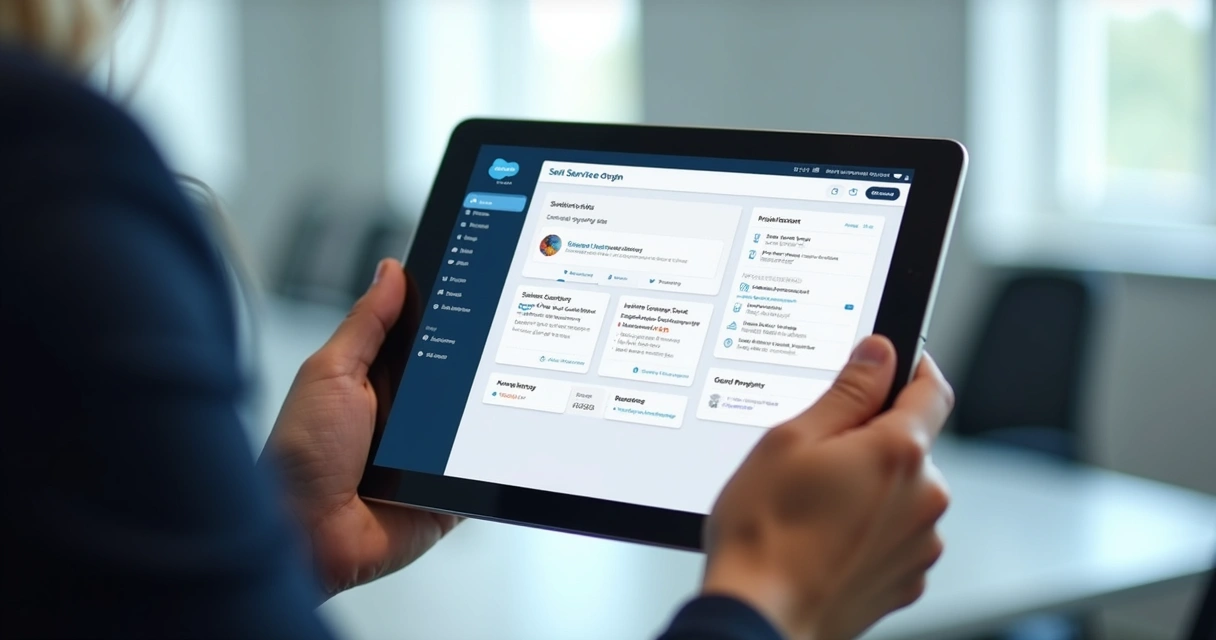 The importance of documentation and the knowledge base
Documentation is not just a formality. A well-built knowledge base is what enables self-service, which is growing as a customer preference in Brazil. Writing articles, documenting solution steps, and updating them frequently reduces repeat cases.
When the company invests in this foundation, more and more questions are resolved without having to open cases, which directly reflects in overall service agility.
Bringing people, processes, and technology together: the path to modern customer service
It is not all about technology. It is about bringing together personalized service, a trained team, lean processes, and innovations such as generative AI. Consultancies such as Weenow approach support this way: combining AMS methods, living documentation, automation, and human support.
Change the customer experience by changing the way you provide service.
Conclusion: why invest in well-structured support?
Ultimately, what companies seek is to keep customers satisfied and ensure everything works without slowing down the pace of business. Methodologies such as AMS, methods for recording and prioritising cases, the use of AI, automation, dedicated teams, and well-built knowledge bases together form the foundation of robust support management.
If you feel your company can go further with agile, intelligent and personalized service, it is worth getting to know WeeNow and understanding how its Salesforce solutions can transform support and your business's day-to-day operations. Request an assessment, discuss your challenges and discover new ways to scale with real technology — without empty promises and with a commitment to the future.
Frequently asked questions
How do you open a ticket in Salesforce?
The process involves accessing the support portal designated by the consultancy or your company, filling in the form with details of the issue, attaching documents or screenshots, and classifying the urgency. In many cases, AI-based solutions help suggest answers while the form is being completed. Whenever possible, provide all details to speed up triage.
You can test WeeNow support by accessing this LINK HERE.
What is Salesforce support for?
Support is focused on answering questions, fixing issues, implementing improvements and ensuring that CRM use continues without interruption. It ranges from answering simple questions to carrying out integrations, automating processes, training teams and adapting features to the company's needs.
How can artificial intelligence be used in customer service?
AI can be used in several ways: bots to answer frequently asked questions, multilingual virtual assistants, automatic case classification, response prioritisation, and automatic generation of knowledge-base articles. Tools such as Agentforce act as copilots for human agents in day-to-day customer service.
What support channels are available?
The main channels include: online ticket portal, email, phone, live chat, and automated bots. Under advanced contracts, there are video-service options and 24-hour support, always depending on the package contracted with the responsible consultancy.
Is Salesforce support paid?
There are free options that cover the basics, but paid plans are recommended for faster, specialized service or support that integrates automation and AI. They provide priority access and advanced features, adapting the service to the customer's size and needs.
Learn about our support plans here.
Continue reading
Related posts
Salesforce CPQ: when to choose native, integrated, or customised?
Compare CPQ architectures in Salesforce, understand the legacy status, and assess integration, Brazilian tax requirements, and total cost over 36 months.

Service Cloud: what it is, how it works and when to use it
Understand Service Cloud, now presented as Agentforce Service: use cases, channels, SLAs, AI, integrations and criteria for evaluating your operation.

CRM integrated with WhatsApp: how to integrate without replacing your system
CRM integrated with WhatsApp means connecting WhatsApp's official API to the CRM you already use, without replacing your system. See the models, risks and how to do it in Salesforce.