
Salesforce for education: 5 applications that transform institutions
Discover 5 ways to use Salesforce to optimize academic management, engagement and automation in educational institutions.
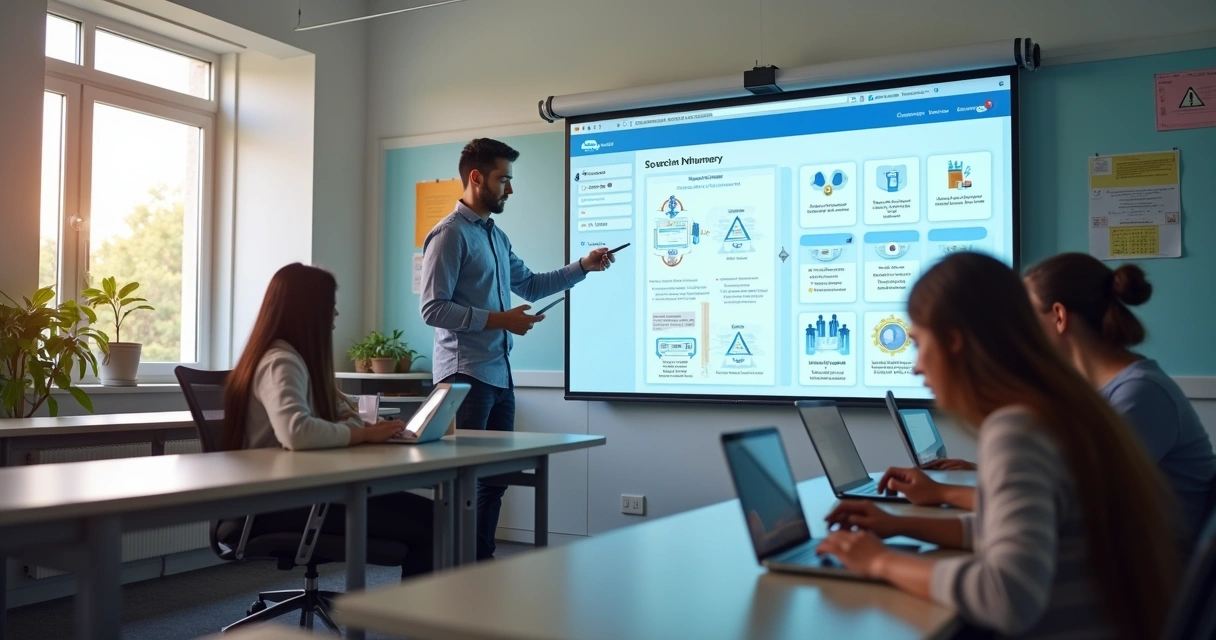
Over years of following the digitalisation of the education sector, I have seen countless technologies try to transform relationships among managers, teachers, students, and families. Some created shortcuts; others, barriers. When I came to know Salesforce, I quickly noticed a differentiator: it connects everything, integrates data, and provides a complete view of the student, from initial contact through post-graduation. Today I want to share five applications of this CRM that, in my assessment and experience, truly transform educational institutions—whether a small school or a large university.
Why does Salesforce make a difference in education?
Before detailing the applications, I need to share something I always emphasize in conversations with school owners and coordinators: education is an ongoing relationship. No matter how advanced the teaching methodology may be, if communication is lost, students feel alone. Salesforce offers tools to bridge distances and expand results, and this is where the consultancy of an official partner such as WeeNow makes a difference: tailoring the platform to the reality of each institution.
Simplify processes, bring people closer, and increase the value of the educational experience.
1. Student recruitment and enrollment management
This is the starting point for every school journey. I have seen schools lose enrollments because they relied on scattered spreadsheets or disconnected forms. With Salesforce, the prospective student's journey becomes organized:
- Automatic capture of leads from online forms, social media, or trade fairs
- Automated nurturing: prospective students receive information at the right pace via email, SMS, or WhatsApp
- Real-time tracking by sales and academic teams
- More agile enrollment process, with no data lost along the way
Institutions that bring sales, marketing, and administration together in a single environment see the difference within the first few months. If you would like to understand the details, I recommend the specific content on Salesforce Sales Cloud, which highlights many of these points.
2. Engagement and communication with students and guardians
At many schools and universities I have encountered, communication with students and families was centralised in generic emails or physical noticeboards, which were almost always ignored. Salesforce changes this scenario:
- Sending personalized information: reminders about tests, events, and class announcements
- Integrated channel for questions, requests, and tracking of inquiries
- Automated answers to frequently asked questions, speeding up processes
- Unified interaction history, avoiding internal miscommunication
This closer engagement generates results that are not reflected only in the numbers – student and family satisfaction tends to increase. That is why I delved deeper into the potential of Salesforce Service Cloud for education.
 3. Integration of academic and administrative systems
It took me time to accept that system fragmentation is one of schools' greatest pain points. Grades, attendance, billing, activities—each area “living” in an isolated world, with rework and the risk of human error. Salesforce enables integration with legacy systems, ERPs, grade-management platforms, and even virtual learning environments:
- Consolidated data in a single interface
- Dashboard with indicators that truly matter to management
- Automated alerts for critical situations (overdue payments, low attendance, academic performance)
- A significant reduction in time spent on bureaucratic tasks
On the website of WeeNow, there are several examples of these integrations that transform institutions' day-to-day operations. I am always impressed by the difference this makes even for small schools, not only large networks.
Data together, people focused on what truly matters: learning and support.
4. Automation of academic and administrative processes
At first, I had doubts about automation – could it really bring benefits without making service feel robotic? But by following implementations carried out by Salesforce-certified teams, I saw that routines become easier because there is more time for human connection.
Salesforce automates everything from requests for duplicate payment slips to complex workflows such as transfers and enrollment suspensions:
- Automatic generation of documents, certificates, and statements
- Record updates and notifications without manual intervention
- Organized recurring billing processes
- Customised approval workflows according to institutional rules
Some solutions go further, including artificial intelligence analysis to identify dropout patterns and suggest preventive actions. Weenow's expertise, especially in tailored automation, has an impact from basic education through postgraduate studies.
5. Support, follow-up, and continuous development
No technology solution works without support, ongoing development, and training. When supported by a partner such as Weenow, Salesforce provides technical support, employee training, and continuous adjustments as the institution grows:
- Regular platform updates, keeping up with CRM developments
- Training for administrative, academic, and sales teams
- Continuous optimisation based on indicators and feedback
This creates a virtuous cycle: processes improve, teams adapt quickly, and when new challenges arise, a solid foundation for innovation is already in place. I always emphasize the importance of seeking advice from those who truly understand education and Salesforce. On the WeeNow on implementation you can understand how this close follow-up works.
 The impact is real—and it starts right away
If I had to summarize it in one line: the more tailored and well-supported the implementation, the more visible the Salesforce transformation becomes. Whether it is to attract more students, bring families closer, reduce bureaucracy, or evolve each semester, the applications shown above have proven results in hundreds of institutions.
On the Weenow blog, there are many examples of Salesforce specialisations tailored on demand for the education market. But if you feel that your school, college, or university centre can grow, the best path is to speak with people who understand the platform and have already made this happen elsewhere.
I invite you to explore the Weenow Salesforce solutions and discover how digital transformation can be simple, practical, and fully supported as your institution takes the next step.
Frequently asked questions about Salesforce in education
What is Salesforce for education?
Salesforce for education is the use of the CRM platform to integrate, organize, and improve recruitment, communication, academic management, and administrative processes in schools, colleges, and universities. With adaptations for the sector, it offers dedicated capabilities for ongoing relationships with students and guardians.
What are the benefits of Salesforce in schools?
Benefits include personalised communication, data centralisation, task automation, integration with external systems, intelligent reports for decision-making, and closer relationships with students and families. The practical result is usually increased enrollment, lower dropout rates, and less overwhelmed teams.
How do you implement Salesforce in educational institutions?
Implementation should begin with an assessment of needs, selection of the right modules (such as Sales Cloud and Service Cloud), and a specialized partner like Weenow. Then comes integration with existing systems, employee training, and adjustments until everything runs smoothly and securely.
Is Salesforce worth using in education?
I believe so, especially for institutions seeking growth and a close relationship with students. The investment pays back through improved processes, student-body satisfaction, and increased revenue, especially when supported by experienced consulting and continuous follow-up.
What functions does Salesforce offer universities?
Salesforce offers functions such as student-recruitment management, integration with academic systems, process automation, centralised communication with students and faculty, customised reports, and post-graduation follow-up. In addition, it can be tailored to the needs of each department or course, bringing flexibility and scale to universities.
Continue reading
Related posts

Salesforce CPQ: when to choose native, integrated, or customised?
Compare CPQ architectures in Salesforce, understand the legacy status, and assess integration, Brazilian tax requirements, and total cost over 36 months.

Service Cloud: what it is, how it works and when to use it
Understand Service Cloud, now presented as Agentforce Service: use cases, channels, SLAs, AI, integrations and criteria for evaluating your operation.

CRM integrated with WhatsApp: how to integrate without replacing your system
CRM integrated with WhatsApp means connecting WhatsApp's official API to the CRM you already use, without replacing your system. See the models, risks and how to do it in Salesforce.